by Tom Lewis
Cheese, like wine, is an artisan product - largely hand-made, a living, breathing product that matures and changes over time, each example being ever-so-slightly different from the next and respondings minutely to processes and storage conditions.If you want to see what could happen in the world of mass homogenisation of wine under a fiver in a few years' time, just look at a row of pre-packed, industrially-made cheeses on your local budget supermarket shelf for the potential consequences.In this country, at least, cheese has gone the way of chicken and salmon - a once expensive and flavoursome delicacy, it is now frequently a mass-market, mass-produced product whose only role is to provide bulk, but not flavour, to a meal.But it was not always the case - in the days before refrigeration, ...
by Chef David Darugh
Brigadoon is a place that is idyllic, unaffected by time, and distant from our world of tension and stress. Crane Creek Vineyards fits this definition perfectly. Gayle and I have traveled the world in quest of food and wine and few locales feel as cozy and comfortable as Crane Creek Vineyards.Owners Eric and Deanne Seifarth have assembled a “family” of employees and constructed a small “village” of operations at the very northern boundary of Georgia in the Shadow of Brasstown Bald. With an infectious smile, Eric told us “wine is second; the experience for our visitors is the first priority. Making wine is just the controlled spoilage of grape juice.” We can certainly attest that Crane Creek has assembled a wonderful crew of helpers. They ensure that every guest gets greeted im...
by Chef David Darugh
The enjoyment of food is as much visual as it is about taste and smell. Both Gayle and I care about how food is presented to us. Maybe it’s because of our artistic backgrounds. Before I became a chef I was an artist, specifically a painter, as was my mother. Gayle is a musician and comes from a family of musicians. Now, looking back after long careers, we can see that the connection between cooking and art is pretty direct. Food presentation goes beyond the arrangement of finished ingredients on a plate. We decorate around food, making our tables beautiful, honoring community with flowers. It is also a reflection of the specific chef’s background, experience and the venue in which the chef practices. The chef in a cafeteria may sparingly dole out few sprigs of parsley, while a chef in...
by Stefanie Phillips
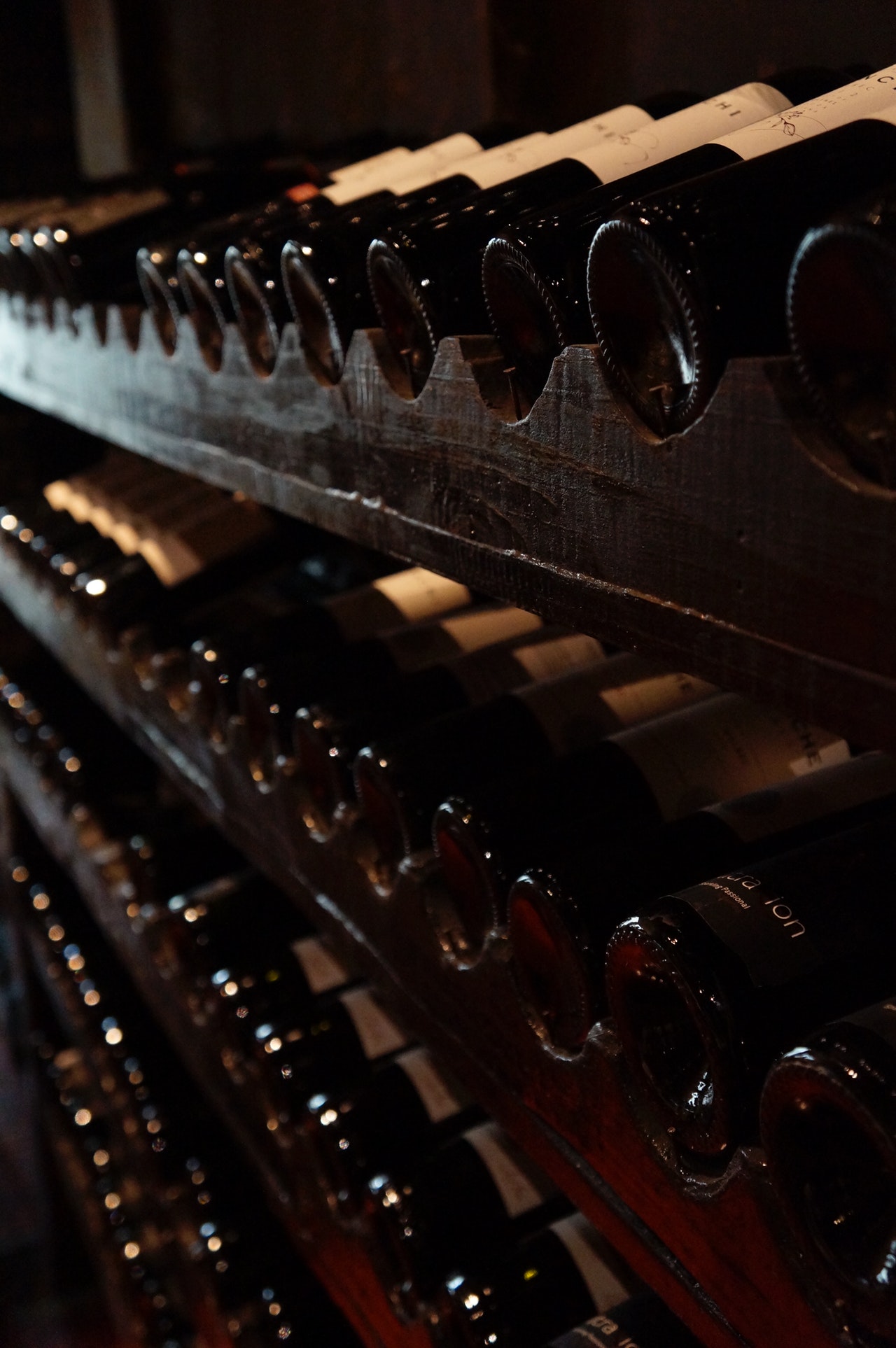
Home wine cellars are now a big part of home design. If you’re a wine lover, nothing says luxury quite like a home wine cellar. Unless you’re building a new home, however, finding a place to put your home wine cellar can be a challenge. Consider some of the following ideas:Convert a walk-in closet. Do you have a walk-in closet in a guest bedroom or a large linen closet that could be transformed into a wine cellar? Convert a former pantry. Many older homes are lean on closet space. However, many do have a pantry located off of the kitchen. Just be sure the space is located far from appliances if you don’t plan to add a temperature control system.Utilize the basement. Homes with a finished basement or utility room might have an extra corner where you can install a home wine cellar. U...
by Ron Kapon
The Texas wine grape industry started in 1650 when Father Garcia de San Francisco y Zuniga, the founder of El Paso, planted vineyards for the production of sacramental wine (he is credited with the first vineyard planted in North America). He planted the Spanish black grape appropriately named 'Mission,' as did most padres who established missionary outposts on the Texan plains. The Franciscans developed irrigation techniques and the vineyards flourished. Viticulture remained an important industry until the early decades of the 1800’s. European settlers to South and Central Texas started vineyards using grapevine cuttings brought over from their homelands. Though the post Spanish era increased the population of Texas to around 100,000, for the "gringo" whisky was king. It was not until t...
by Stefanie Phillips
1.corked2.cooked3.oxidized4.sediment5.sulphur6.refermentationEven with modern winemaking, wine storage, wine cellars and shipping technology, about five percent of all wines arrive at the table bad to some degree. Here are some tips on how to spot and avoid bad wine.CORKINGIt all begins with a cork. Even in this day of high-technology plastics, many bottles still have a cork stopper. Cork, a product of the bark of selected Mediterranean trees, has many highly desirable and hard to duplicate attributes. It is lightweight, resistant to disease and airflow, flexible and attractive.But as a natural product, cork is subject to attack by microorganisms. Certain species of fungus, present anywhere wine is stored, can infiltrate the cork producing a compound called TCA ( or 1,2,4-trichloroanisole)...
by Alexandra Ronca
Wine making is a very delicate process. The slightest modification during production can drastically change the balance and flavors of the wine. In order to achieve a consistent and enjoyable blend, everything that comes in contact with the wine must be immaculate and thoroughly sanitized. It is essential that tanks, barrels, and pipes be sterile at all times. The smallest impurity can spoil the quality of the wine. This sanitation process is incredibly tedious. Wine naturally contains a very low level of sulfites. However, to combat impossible sanitation challenges, wine makers infuse additional sulfites into the wine during production. Sulfite additives preserve the natural flavors and conditions of the wine and inhibit the growth of bacteria. By adding sulfites, the risk of contaminati...
by Tom Lewis
Of the things Ukraine is famous for, high up on the list are probably the Chornobyl explosion, periodic stand-offs with its overbearing, northerly neighbour, vodka and a book about tractors. Once "the bread basket of the Soviet Union", it is also known for its richly fertile "black earth". It is perhaps less know on the world stage for its wines which are, in all honesty, not world class and generally come from the south, especially the Crimean peninsula which is one of the few parts of the country that does not get too cold in winter for vines to survive. Most famous of these may well be Sovetskoye Shampanskoye, an excellent value, if undemanding, generic sparkling wine which, apparently, is still allowed to call itself Champagne for historic reasons.Less well known, but of more note are ...
by Tom Lewis
A few years ago, I took a drive holiday through Alsace and Germany; the best wines from that trip came from Paul Schneider in Alsace and Kirchengut Wolf in the Mosel valley.The general itinerary for the trip was Cambridge, Calais, Belgium, Alsace, the Black Forest, Heidelberg, the Mosel valley and back to Cambridge; Heidelberg is Cambridge's twin city which gave me one reason to visit it - the other is its beautiful castle overlooking the old town and river.Starting out from Heidelberg, we first drove along the Rhine valley before a cross-country dash to Traben Trarbach in the Mosel. The rolling countryside we drove through felt less stereotypically Germanic than the big industrial or Hanseatic cities one associates with the Bundesrepublik Deutschland - it was agricultural and neatly, gent...
by Tom Lewis
Champagne is a triumph in many senses - it is technically very difficult to make, requiring secondary fermentation in bottle with all the remuage and degorgement that that entails; before that, it requires the the making of a base still wine in a northerly and pretty marginal climate, no mean feat in itself.The finished product, with its fine bubbles, yeasty aromas and hints of brioche and toast is one of the great wines of the world and the consumption of it is usually also a triumph of some sort - a wedding, anniversary or significant birthday.But it is also a triumph of marketing and pricing strategy - Champagne is the sparkling wine for an occasion; you do not need to be a fan of motor sport to be familiar with the image of Formula 1 drivers dousing themselves with a magnum of Champagn...